Sesame Summit 2026 – application open

Startups Invest in PR: Is it the Right Move for You?

So, you’ve built something remarkable, your startup is buzzing, and you’re thinking: “It’s time for the world to know about this!” Engaging in public relations (PR) may seem like the next logical step. But before you pop the champagne and start drafting press releases, take a step back. Is PR the right move for your startup right now? Like all good things, timing and intention are everything.

The “why” and “when” of PR are two sides of the same coin, making it essential to explore both together. Whether PR will be a game-changer for your startup—or a frustrating drain on resources—depends on understanding your motivations and timing.

Let’s break it down!

Why PR? The Benefits for Startups

Storytelling, Image, and Trust. At its core, PR is about storytelling. You’ve developed something incredible, but it’s not enough for your team to know that—you need your target audience, investors, and the media to know it, too. A well-executed PR strategy builds trust, enhances your brand’s image, and amplifies your message. It shapes how your company is perceived at every customer journey stage.

Good PR also boosts brand awareness. You enter public consciousness by sharing your story through media coverage, speaking engagements, and podcasts. It’s not just about people knowing your name; it’s about them understanding why they should care.

Building Relationships with Key Stakeholders

PR isn’t just about communicating with customers; it’s about establishing relationships with essential stakeholders, including financial regulators, government bodies, and potential partners. Strategic PR positions your startup as a trustworthy and credible player in the market, opening doors to partnerships, hiring opportunities, and other valuable relationships.

Attracting Top Talent

While a competitive paycheck is attractive, today’s top talent seeks more than just financial compensation. PR can help establish your startup as an exciting workplace. A positive media presence builds a reputation that attracts the best minds in the industry.

Fundraising Opportunities

Venture capitalists (VCs) love a compelling story. Can you blame them? PR can generate buzz, craft a narrative around your startup, and help position you as the next big thing. While money talks, media attention speaks volumes—investors are looking for market opportunities and innovative founders capable of scaling their businesses.

Understanding Newsworthiness

It’s crucial to recognize what makes a story appealing to the media. Newsworthiness hinges on relevance, timeliness, and impact. Journalists seek stories that capture their audience’s attention. If your startup solves a real problem, disrupts an industry, or raises significant funding, you’ve got newsworthiness. Conversely, if your startup is still in the idea phase with little to showcase, PR might not be effective yet.

Here’s a quick breakdown of newsworthy stories that journalists typically cover for startups:

  • Product launches that revolutionize an industry
  • Funding announcements that demonstrate market confidence
  • Founders with unique backgrounds that distinguish them from competitors
  • Partnerships with well-known brands or influencers
  • Research offering unique data and insights

Startups that can share compelling stories, statistics, and case studies have a better chance of getting media attention.

Why Not to Start PR (Yet)

It may seem controversial for a PR agency founder to share the downsides of early-stage PR, but we want the work to be effective. Sometimes, it’s simply too soon! Jumping into PR prematurely can backfire.

If you’re pursuing PR solely for vanity—trying to get press coverage without a substantial story—you’ll quickly deplete resources with minimal return. Consider your customer journey: what role could PR play in optimizing your funnel? If you successfully acquire customers through performance marketing and have limited resources, it may be wiser to continue focusing on ads.

When Should You Start Doing PR?

PR isn’t a magic switch you flip on whenever you feel like it. Timing is crucial, and knowing when PR will deliver value for your startup is essential. Here are key questions to consider:

When Is Your Startup Newsworthy?

The answer is straightforward: the bigger and more successful you are, the more newsworthy you become. However, you can maximize your current newsworthiness at any stage.

  • Early Stages: PR works best when you have something tangible—like a product launch or initial funding—to announce. An experienced or expert founder can still gain visibility through thought leadership, especially with compelling insights.
  • Product-Market Fit (PMF) and Scaling: Once you’ve established PMF, PR becomes a powerful tool in various ways. As your startup grows, media outlets may seek you out more. Leverage evidence of your impact to position your startup as an industry leader and attract customers through innovative campaigns.

Is NOT Doing PR Costing You?

You might miss opportunities if your startup is scaling but not engaging in PR. Every unreported newsworthy event means potential customers, investors, or partners miss out on exposure and trust and may turn to competitors instead. Determine when neglecting PR becomes an opportunity cost. Is trust vital in your customer acquisition, hiring, or fundraising efforts?

Does Your Team Have the Bandwidth?

PR isn’t just something you outsource and forget about. It requires input from your team, whether reviewing press releases or providing insights for thought leadership pieces. Ideally, the intellectual overseer of PR should be a founder, preferably the CEO. If you’re too busy building your product or seeking your next round of funding, and no one else can provide strategic input, it may not be the right time for PR.

Budget and Timing Considerations

PR is an investment that requires proper budgeting. Ask yourself: do you have the resources to commit to PR long-term? PR is most effective when consistent; sporadic media attention rarely yields sustained results. If your marketing budget is tight, consider prioritizing other areas, such as sales or product development. However, a well-timed funding announcement or significant news can lay the groundwork for future PR efforts.

When Not to Do PR

PR won’t be effective if you have nothing to say. If you’re too early in your journey, too busy to participate, or not newsworthy yet. You can always return to PR when you have compelling stories to share. Understanding what is newsworthy and what isn’t is crucial, so ensure you study this aspect thoroughly.

Let’s Wrap This Up!

PR can be a powerful tool for startups—but only when executed at the right time and for the right reasons. When your startup is ready—with news to share, a story to tell, and the capacity to support a PR campaign—PR can help propel you to new heights.

With a little self-awareness and the right timing, PR can be the catalyst that takes your startup from unknown to unforgettable!
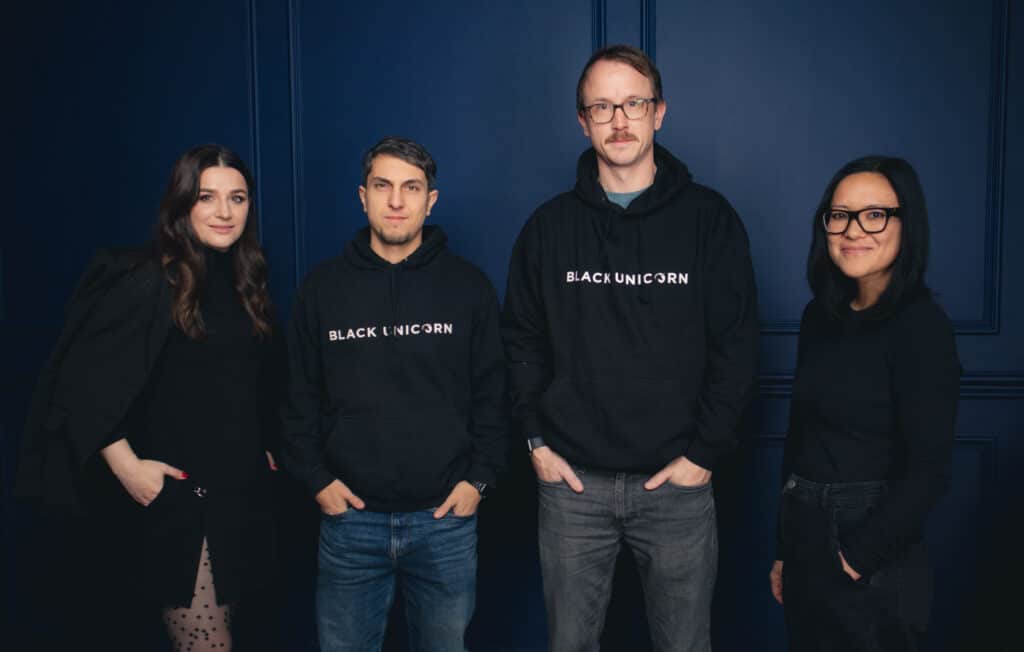
Startups Invest in PR
📸: Black Unicorn PR
Photo by Gabriela Sokolova

you might also like

Founder in Biarritz
Events 4 days ago

The event calendar goes quiet in July and August. Deadlines don’t. This article assumes you’re an early stage founder, pre-seed or seed at most, without a marketing team. You are the events team. The next eight weeks are the only window of the year where you can work on your startup event strategy instead of running it. Here’s how to use them, roughly in order of urgency. 1. Search for calls for speakers Most Q1 and Q2 2027 conferences select their speakers in autumn, which means applications open now. SXSW PanelPicker is the obvious one and since it closes on July 26th they always lack submissions from Europe. But every major event runs some version of it, usually buried three clicks deep on their website. Before you apply anywhere, build a speaker one-pager: your topic, three talking points, a short bio, one decent photo, and links to any previous talk. Program teams review hundreds of proposals. Make theirs easy. 2. Apply to startup competitions Autumn competitions open their calls in summer: One warning from someone who reads hundreds of these applications every year: judges can tell when ChatGPT wrote your answers. Roughly 80% of the applications I review show obvious AI usage, and the low-effort ones go straight to the no pile. Use AI to structure your thinking if you want. Write the answers yourself. Sophie wrote a full breakdown of how startup competitions work from the organizer’s side. Read it before you apply. Knowing what organizers optimize for changes how you write. 3. Apply to your country’s delegation for major events CES, MWC, Web Summit: most countries send an official startup delegation, and the selection happens months ahead. For CES only: Netherlands, France, Hong Kong, etc. A quick LinkedIn search gives you tons of results.  Delegations get you a subsidized booth, press attention you’d hardly get alone, and a cohort of founders going through the same thing. The application effort is low compared to what you get. The catch is timing: CES delegations typically close applications in September. 4. Get feedback from founders who exhibited in your industry Summer is the one season when people answer cold messages. Search LinkedIn for founders who exhibited at the last edition of the trade show you’re considering using its hashtag. Ask for 15 minutes. Ask three questions: what did it cost in total, how many qualified conversations did they have, and would they do it again. Three of these calls will teach you more than most post-event reports the organizer publishes.  That’s what we learned interviewing ReSnack founders. 5. Run a pitch practice session with your peers, and moderate it Get five founder friends on a call or around a table. Everyone pitches, everyone gives feedback. You moderate. The pitching part is obvious. The moderating part is the underrated one: keeping time, asking follow-ups, managing the room. That’s a skill you’ll need on every panel you ever join, and nobody teaches it. As Lubomila Jordanova told us on the Selected podcast, small formats with harsh feedback are where you learn to hold an audience. 6. Volunteer at a startup event Unglamorous advice, and one of the best access you’ll ever get. Volunteers see how the machine works from the inside: how speakers get booked, how the VIP room operates, who actually makes decisions. You’ll meet the organizing team, and organizing teams remember people who showed up to work. An obvious one is Slush where 1,800 volunteers come together to produce one of the best startup events on earth: https://slush.org/audience/volunteers  7. Plan a side event for the back-to-office season Every ecosystem has a September event where everyone reappears. For example FDDay in Paris. Don’t compete with the main program. Host a breakfast before it opens or drinks after it closes, 20 to 30 people, one clear theme. Side events cost a fraction of a booth and put you in the host position instead of the badge-wearing position. Start planning now: venues and calendars fill up faster than you’d expect for the first week of September. 8. Budget your 2027 event strategy Nobody wants to open a spreadsheet in July. Do it anyway, because budget season at your company happens whether you participate or not. The mistake founders make is counting the ticket and the flight and stopping there. Every event day requires two preparation days: outreach before, follow-up after. That’s the 2:1 rule, and it changes the math on which events deserve a slot at all.  Pick a maximum of 5 events for 2027. Assign each one a job: sales, hiring, fundraising, or press. If an event has no job, it has no budget line. 9. Check if your summer festival has a business track A growing number of music festivals run pitching sessions or networking programs alongside the main stage. Tomorrowland even hosts a dedicated event around impact & social innovation: Love Tomorrow Summit.  Is the deal flow serious? Sometimes. Is it the most pleasant place you’ll pitch all year? Definitely. If you’re on holiday near one anyway, the marginal cost is a badge upgrade. 10. Rest The circuit restarts in September and doesn’t stop until Christmas. Slush alone will take a week out of your life, and that’s before the follow-up emails. Founders treat rest as a productivity hack, which slightly misses the point. Take actual time off. Turn off the notifications. The events will still be there in September, and so will everyone else, looking exhausted already. Don’t be them. Photo credit: Anik Labreigne on Unsplash + Gemini

la fabrique a nuage la barbe a papa sans sucre qui revolutionne le snacking 1726502154
Startups 1 week ago

The founders behind NUAGE, the sugar-free cotton candy rated Nutri-Score A, share their playbook for event strategy, budget, and pipeline ROI. If you’ve walked the aisles of a French food trade show recently, chances are you’ve seen — or tasted — a small cloud of the impossible: cotton candy with zero sugar and a Nutri-Score A. Behind it is Re.Snack, a startup founded in 2023 near Dijon by Vanessa and Florian, on a mission to reinvent confectionery. Their first product, NUAGE, is built on Sucr’A, a proprietary sugar substitute developed with AgroSup Dijon that uses plant fibres (isomalt and inulin) to recreate cotton candy’s signature melt-in-the-mouth texture — without sugar, allergens, colourants, or preservatives. The traction speaks for itself: revenue up from €200K to €7M in two years, distribution from 100 to 5,000 points of sale, more than 15,000 online orders, national TV exposure on M6 — and a reported acquisition offer from Lindt that the founders turned down. They’d rather build a brand than become a subcontractor. A sugar-free, fat-free popcorn is next. But what caught our attention is how they grew. For Re.Snack, trade shows aren’t a marketing expense — they’re the core of the sales machine, with a dedicated budget, pipeline targets, and hard ROI thresholds. So we sat down with the team and asked the five questions every founder should be able to answer about their event strategy. Sesamers: Let’s start with the basics. What role do events play in your sales motion — sourcing net-new pipeline, accelerating open deals, or closing? Re.Snack: Events are our number one growth channel. They generate new business, strengthen relationships with existing customers, and accelerate ongoing opportunities. In the food industry, people buy products, but they also buy the team behind them. Face-to-face interactions build trust much faster than emails or calls. That’s a big claim — number one channel. Does the budget reflect it? What share of your sales & marketing spend goes to events, and what target does it carry? Around 25% of our sales and marketing budget is dedicated to events. We consider them a strategic investment rather than a communication expense. Our objective is that every euro invested generates multiple times its value in qualified commercial opportunities over the following 12 months. Twelve months is a patient window. When you look across the whole portfolio of events, what does the blended pipeline ROI actually come out to? On average, we generate between 8x and 12x pipeline ROI across our major trade shows. Some flagship events, such as SIAL or ISM, can significantly outperform that because they concentrate the world’s key retail buyers in one place. Meetings are easy to count, revenue less so. Which events actually convert — not just into conversations, but into business? The events that convert best are those attended by decision-makers with active buying projects. For us, SIAL Paris, ISM, Snack Show, and major retail buying conventions consistently generate tangible business. Success isn’t measured by the number of meetings, but by the quality of follow-up and execution afterwards. Last one on the numbers: at what point do you decide an event has earned a bigger budget? What’s your threshold for scaling up? We increase investment once an event consistently delivers at least a 5x pipeline ROI and proves it can generate repeatable business over multiple editions. We look at long-term customer value rather than immediate sales, because retail cycles can take several months. Before we let you go — for the food founders reading this, what would be your top 5 events? My top five would be: What founders should take from this Beneath the answers sits a playbook any startup can copy, whatever the industry. Events have a job description. Re.Snack doesn’t attend trade shows to “be visible” — events source new business, deepen existing relationships, and accelerate open deals. If you can’t name the job an event does in your sales motion, you have travel expenses, not a strategy. The budget is an envelope with a target attached. A quarter of sales & marketing spend, set deliberately and measured against a pipeline expectation over 12 months. No target, no budget. ROI is measured blended, on a realistic clock. Individual events fluctuate; the portfolio number — 8–12x pipeline-to-cost in Re.Snack’s case — is what tells you whether the channel works. And the attribution window matches the sales cycle: judging a trade show by orders signed on the show floor would kill investments that pay off two quarters later. Conversion beats meetings, and follow-up is where ROI is made. The filter is decision-makers with active buying projects — not badge scans. The event budget implicitly includes the week after the show, not just the days of it. Budget growth follows proven return. A 5x floor, plus repeatability across multiple editions, before a single extra euro flows. One great year doesn’t unlock more spend; a pattern does. Run this way, events stop being a cost centre with nice catering — and become a growth channel with receipts. Company background via nuage.resnack.fr, France 3 Bourgogne-Franche-Comté, and Traces Écrites News.

Sesame Summit 2026 Workshop
Events 3 weeks ago

This week I read about a hackathon claiming 6,000 attendees over a single weekend. The venues hosting it can’t accommodate more than 1,000 people. Nobody in the comments asked how the math worked. That gap between the claim and the room is what this article is about. For most event organizers, event metrics are marketing, not measurement. Once you understand how attendance numbers are built, why ROI stays a black box, and why matchmaking is often bad on purpose, you’ll read every post-event press release differently. Here’s a decoder. The vocabulary nobody explains to you The event industry has precise definitions. It just doesn’t advertise them. UFI, the global association of the exhibition industry, publishes calculation standards and auditing rules for all of them. Independent bodies like ABC audit against them. Here’s the short version. Visitor. One human being who came to the event. If I attend all three days, I’m one visitor. Visit. One entry through the doors. My three days now count as three visits. UFI accepts both figures in its audits, defines visits as visitors plus repeat visits, and requires the term used to be clearly indicated on the audit certificate. Guess which number ends up on the homepage. Attendee / participant. No standard definition. These are the marketing words. They can mean visitors, visits, registrants, exhibitor staff, speakers, press, students or the organizer’s own team, in any combination. When you read “50,000 participants,” you’re reading a number with no agreed method behind it. Registrant. Someone who signed up. Free registration events love this one, because no-show rates of 30 to 50 percent are common and registrations cost nothing to inflate. Exhibitor. Elastic too. UFI distinguishes direct exhibitors, who contract with the organizer, from co-exhibitors, who are part of a shared stand (think country pavilions). Both count. Daily exhibitor. A company present for a single day, typical in startup zones and rotating programs. A startup using a shared booth on day 2 only counts as one exhibitor, exactly like the anchor brand that paid for 400 sqm across the full show. Pavilion / delegation. A block of space booked by one entity, usually a national export agency, a region or a corporate, then filled with smaller companies. One contract, one invoice, 25 logos. Pavilions are how organizers cluster small booths into themed areas, and how “1,200 exhibitors” can describe wildly different realities. Net vs. gross exhibition space. Net is the square meters actually rented. Gross includes aisles, catering areas and that giant entrance arch. As a rule of thumb: net space is 50% of gross space at an average show.  The prosumer padding One more layer on the attendance side. Many events count audiences that are professional on paper only. Student groups bused in for the afternoon. Employees of a corporate partner who run one workshop on day 3. Startup founders’ plus-ones. Locals with a discounted badge. I’m not saying these people have no place at events. Some of the best energy on a show floor comes from them. But if you’re an exhibitor paying for access to buyers, a headline number that mixes procurement directors with second-year students is not relevant. Ask for the audience breakdown by profile. If the organizer can’t produce one, that tells you something too. The ROI black box Here’s the uncomfortable part: almost nobody wants to know if an event actually performs. CEIR, the research arm of the U.S. industry association IAEE, paused its exhibitor spend research for years and only resumed it in late 2025. Its 2026 Marketing Spend Decision Report finds that management evaluates exhibition ROI mainly on lead volume and post-show closed deals, and documents a gap between what practitioners track and what leadership actually cares about. The industry’s reference dataset on exhibitor spending had not been refreshed since 2017. Read that again: the largest B2B marketing channel went eight years without updated benchmarks. The exhibitor side confirms the fog. Vendelux’s 2026 B2B Events Survey of 120+ marketing and events leaders found that 86 percent can’t accurately attribute ROI to events, and 98 percent struggle to justify event spend to leadership. Yet 80 percent are maintaining or growing their sponsorships anyway.  Organizers benefit from this fog. Some only release their data points after the event is over, when your booking decision for next year is already locked in early-bird pricing. Others share nothing beyond the headline number. Try asking for the seniority breakdown of last edition’s visitors, or the ratio of buyers to service providers walking the aisles. I wrote before that founders systematically underestimate what events cost them, hence my 2:1 preparation rule. The other side of that equation is just as broken: they can’t estimate what events return, because the data to do so is withheld. The GDPR excuse When pushed, some organizers invoke GDPR as the reason they can’t share more. Let’s be precise. GDPR restricts sharing personal data: names, emails, badge scans tied to individuals. It says nothing about aggregated, anonymized statistics. “42 percent of our visitors have purchasing authority” contains zero personal data. An organizer who can’t tell you that either doesn’t know it or doesn’t want you to know it. Neither answer is reassuring. If startups are solving it, ask why organizers aren’t A whole category of companies now exists to answer a question organizers could answer themselves: was this event worth it? Full disclosure: at Sesamers we’re building mytradeshow.ai on this exact gap, so I have a horse in this race. Here are five others working the same seam: Sit with the logic for a second. Organizers gather and process the registration data, the badge scans, the floor plans, the exhibitor contracts. They are the best-placed actors in the world to measure event performance. If third parties have to reconstruct that picture from the outside, it’s because the people holding the data have decided that transparency isn’t always in their interest. Bad matchmaking is a feature One last thing, and it’s my favorite. Whenever an event’s matchmaking is mediocre, don’t

Subscribe to
our Newsletter!

Stay at the forefront with our curated guide to the best upcoming Tech events.